
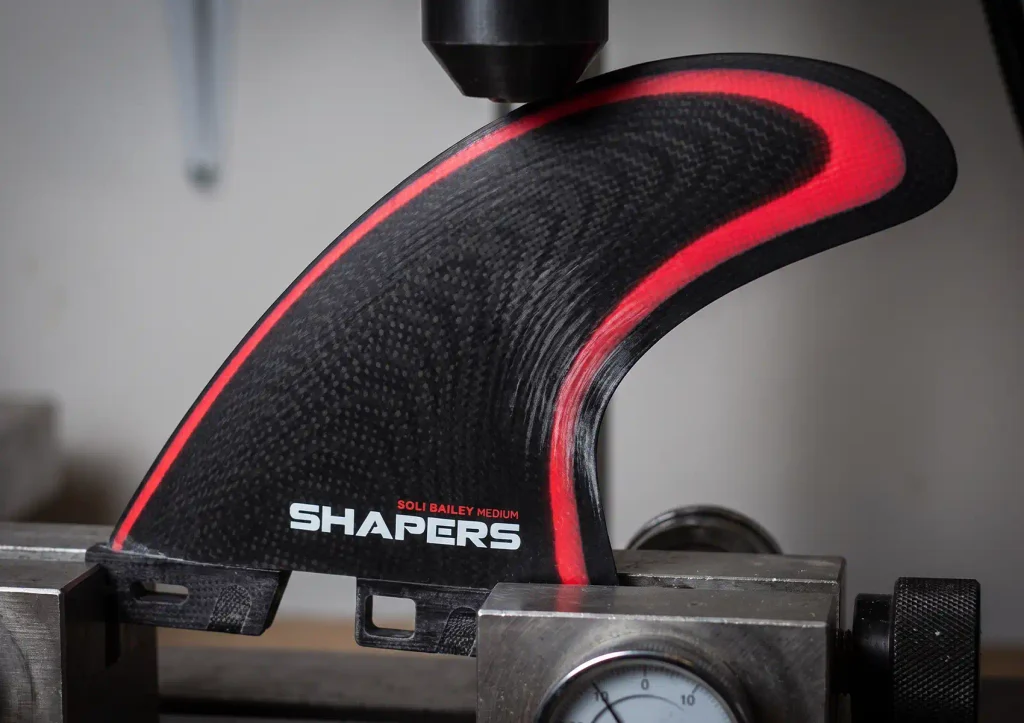
Surfing in Bali means dealing with many types of waves. For example, a small beach break in Canggu needs a different approach than a fast reef wave at Uluwatu. Even the same surfboard can feel very different just by changing the fin setup.
You do not need a different set of surfboard fins for every spot. Instead, knowing how fin size, setup, and shape affect your board helps you find a setup that works in different conditions.
Read the Wave Before Choosing Fins
A good place to start is by thinking about how fast and powerful the wave is.
For softer, smaller waves, it helps to use a setup that makes it easier to generate speed and turn. When the waves get faster and stronger, you will want more hold and control, especially when turning hard.
Fins connect your surfboard to the water. Changing your fins can affect how easily your board turns, how well it holds during a turn, and how much the tail can slide out.
Your board design and surfing style matter too, so there is no one fin setup that works best for every Bali wave. Wave conditions are just one factor to help you choose the right fins for each session.
Small Beach Breaks Can Benefit From Speed and Release
When the waves are smaller at Bali’s beach breaks, you will want to focus on generating speed. A responsive fin setup can make your board feel lively and help you move smoothly from side to side.
Depending on your board and weight, using a smaller fin or a shape that gives more release can make your board feel looser. This is helpful when the waves are weak, and you need to create more speed.
Balance is important. Too much fin can make your board harder to turn, but too little fin can make it less stable and harder to control.
A good way to start is by choosing the fin size recommended for your weight. After that, you can look at the shape and flex to fine-tune how your board feels. This is more reliable than just picking a fin made for small waves.
Powerful Reef Waves Can Benefit From More Hold
Bali’s reef breaks, like Uluwatu, Padang Padang, and Bingin, often have faster and more powerful waves. Since the wave gives you plenty of speed, it is important to have enough hold and control.
A fin shape made for hold and the right amount of flex can help your board stay steady when you turn at high speed. The right setup also gives you more control when you push harder through turns.
Your weight is still important. Heavier surfers usually need bigger fins to get the same hold as lighter surfers. That is why fin makers list weight ranges for each size.
For bigger waves, start with the fin size the manufacturer recommends for your weight. Then, think about the shape and flex to get the board response you want.
Thruster or Quad for Bali Reef Waves
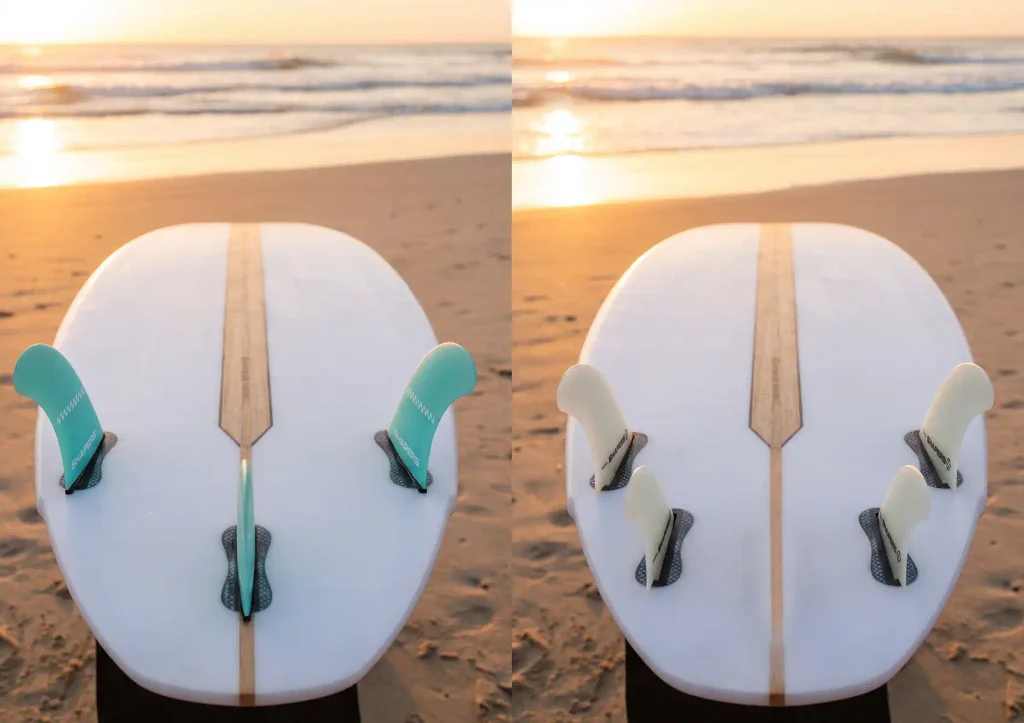
Both thruster and quad setups can work well on reef waves, but each has its own feel.
A thruster has two side fins and a centre fin. It gives a good mix of drive, hold, and turning ability, making it a versatile choice for surfers who like tighter turns and quick direction changes.
A quad setup has no centre fin and uses two fins on each side. This can reduce drag and make your board feel faster and smoother, which helps when you want to keep speed through long sections.
There is no setup that is always better. If you want more speed and flow, try a quad. If you prefer control and easy turning, a thruster might suit you. Your board design also affects which setup works best.
If your board can use both setups, try each one to see how they change your board’s performance.
Match the Fin System to the Board
Performance matters, but your fins also have to fit the fin boxes on your board.
Futures-style or Single Tab fins use one base, while FCS and FCS II have different connection types. Before buying fins, check which system your board uses and make sure the fins will fit.
This is especially important if you have more than one board. A fin that fits one board might not fit another, even if both use three or four fins.
If you are not sure, check your board’s specs or the fin maker’s compatibility info before you buy.
Consider Twin Fins for More Playful Surf
You do not always need a thruster or quad in Bali. Twin fins can be a fun choice for smaller and open waves when you want a looser and more responsive ride.
A twin-fin setup uses two bigger fins and no centre fin, which lets the tail move more freely. This works best on boards made for twin fins and is especially fun when the waves have open sections for long, smooth turns.
For this style, Shapers Bali has twin-fin options like the Asher Pacey Signature Series, available in Single Tab and Futures bases.
As with any fins, make sure the system matches your board before thinking about shape or materials
Match the Fin to the Day
In the end, picking surfboard fins for Bali is about matching your setup to your board, your style, and the wave conditions.
For smaller, softer waves, a responsive setup helps you generate speed and makes turning easier. For faster, stronger waves, you will want more hold and control. A thruster is a good all-round choice, while a quad can give you extra speed and flow if your board is made for it.
The process is simple: pick the right fin system, use your weight to choose the right size, and think about how the wave and your board will affect how it rides.
If you often switch between Bali’s beach breaks and reef breaks, bringing a second set of fins gives you more options without needing a different board.
The more you surf, the easier it is to notice how your board responds to different fins. Over time, picking fins becomes less about specs and more about what feels right for your board and style.



More Stories
5 Questions Before Booking aTreatment at a Beauty Clinic in Bali
What Is a Type Rating Course and Why Is It Essential for Commercial Pilots?
The hotels in Bhubaneswar that will make temple hopping easier